
Cracking the Code: Why Most Casino Players Never Beat the House
Ask ten gamblers why they keep playing and you'll get ten different answers. The thrill of a big win. The social buzz of a poker table. The hypnotic spin of a slot reel that might, just might, change everything. Ask those same ten people why they eventually lose, though, and most will shrug. Bad luck, they'll say. The house always wins. That second part is technically true—but the first part is where things get interesting.
After more than a decade of talking to professional bettors, slot streamers, and poker grinders, one thing stands out clearly: the gap between a recreational player and a consistent winner rarely comes down to luck. It comes down to understanding the machinery beneath the game. That machinery isn't hidden, either. It's advertised, regulated, and published for anyone curious enough to look.
The House Edge Isn't a Rumor, It's Arithmetic
Every casino game carries a built-in mathematical advantage for the operator. This is called the house edge, and it's not a secret society ritual—it's elementary probability.
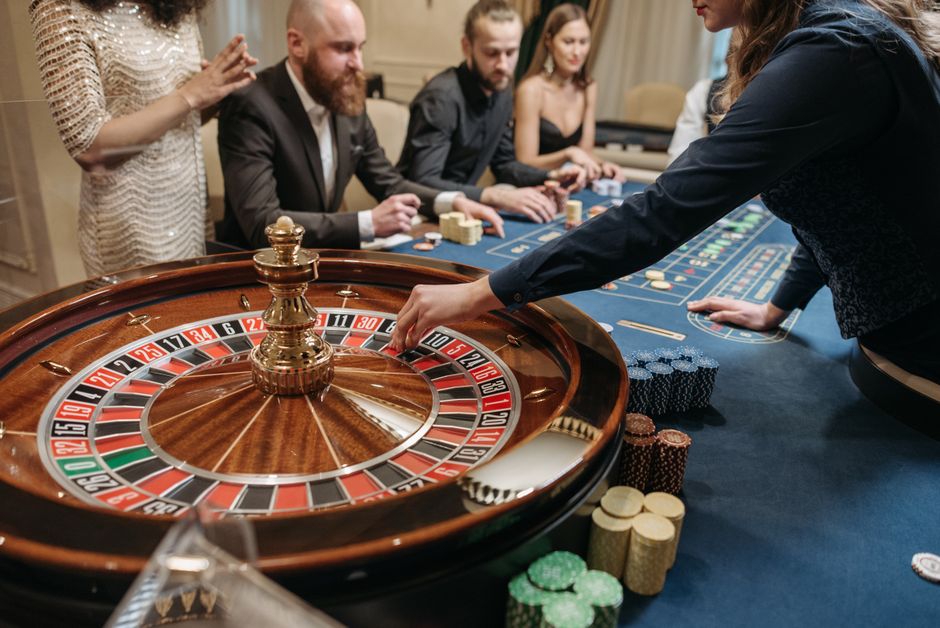
Take European roulette. The wheel has 37 pockets: numbers 1 through 36, plus a single zero. Bet on a single number, and the true odds of hitting it are 36 to 1. But the payout is 35 to 1. That one-number shortfall represents a 2.7% house edge. Now compare that to the American wheel, which adds a double zero. That small green rectangle flips the edge to 5.26%, nearly double. Same game, same excitement, dramatically different cost.
Blackjack tells a similar story. Play perfect basic strategy—a chart of mathematically optimal decisions for every hand combination—and the house edge shrinks to somewhere between 0.5% and 1%. Play by gut feeling instead, hitting on a 16 against a dealer's 6, and that edge can balloon past 2% or 3%. Over a single session, the difference is invisible. Over a year of weekly play, it's the difference between a manageable hobby expense and a slow bleed.
Here's a quick comparison worth remembering:
- Blackjack (basic strategy): 0.5% edge
- Baccarat (banker bet): 1.06% edge
- European roulette: 2.7% edge
- American roulette: 5.26% edge
- Slots (typical): 2% to 10% edge, depending on the machine
- Keno: up to 25% edge
Notice something? The games with the best odds—blackjack, baccarat, even craps if you stick to pass-line bets—reward patience and skill. The games with the worst odds tend to be the loudest and most colorful. That's not an accident. Design follows margins.
Slots: Randomness, RTP, and the Magic of Volatility
Slot machines are where the biggest divide between perception and reality lives. Players talk about "hot" machines and "cold" streaks. In truth, modern electronic slots use a random number generator that fires millions of times per second. There aren't hot or cold machines—there are machines with different payout distributions.
The two numbers worth knowing are RTP and volatility. RTP, or return to player, tells you the percentage of all wagered money a machine pays back over millions of spins. An RTP of 96% means the house keeps 4 cents of every dollar cycled through. That figure is typically tested over tens of millions of plays, so it never describes a single session.
Volatility describes how the machine delivers that return. Low-volatility slots pay small amounts frequently. High-volatility slots pay rarely but potentially enormously. A machine with an RTP of 96% could theoretically drain your balance for hours or spike your wallet in five minutes. Neither outcome contradicts the other. For more on this, see soikeonhacai.ae.org.
Want practical advice? Check the published RTP if your jurisdiction requires it—the UK, Malta, and several EU countries mandate disclosure. Avoid machines below 94% if you plan to play for a while. And decide before you sit down whether you want steady grinding or lottery-ticket thrills.
Poker Is Not a Casino Game—It's a Game of People
A common misconception among casual fans is that poker belongs in the same bucket as roulette or slots. It doesn't. In a cash poker game, the house doesn't compete against you. It takes a small commission called the rake, typically 5% to 10% of each pot up to a cap. The rest of the money moves between players.
That distinction changes everything. Winnings in poker come from opponents, not from a payout table. This means the skill ceiling is nearly unlimited—which is also why the learning curve feels brutal.
Three concepts separate winning players from donating players:
- Position: Acting last gives you more information. That information is worth real money.
- Ranges, not reads: Beginners try to pin opponents on exact hands. Regulars think in distributions, asking what the entire spread of possible hands looks like.
- Bankroll management: Even the world's best players endure losing streaks. Playing limits that let you ride out 20-30 buy-ins of variance is non-negotiable.
If those sound like work, that's because they are. Poker rewards discipline the way chess rewards calculation—romanticized as gambling, practiced as a craft.
Betting Lines Are Smarter Than You Think
If you've ever wondered why your "sure thing" never quite lands, sports betting odds offer a clue. Bookmakers employ statisticians, algorithms, and trading teams to convert real probabilities into priced lines. A fair line becomes a betting line once the book adds its margin, known as the vigorish or juice.
Standard juice on a spread bet is -110, meaning you wager $110 to win $100. That single number translates to a 4.55% edge for the book on what looks like a 50/50 proposition. Winning sports bettors must hit roughly 52.4% of their picks just to break even. Hitting 55% over a full season is considered elite.
Where smart money lives is in the exceptions—promotional boosts, line moves caused by public overreaction, and derivatives of leagues where books have less data. But be honest about the effort required. Beating the closing line consistently is a full-time analytical job, not a Friday night hobby.
What Separates Fun from Frustration
The gaming industry isn't a villain, and it isn't a charitable service. It's a business that sells entertainment with an embedded cost. Slot machines aren't rigged; they're just mathematically tilted. Sportsbooks don't cheat; they price in their edge and wait for volume to do the rest. The wisest posture for players is a blend of curiosity and restraint.
- Set a session budget before you deposit, and treat it as the price of entertainment, not an investment.
- Understand the specific game you're playing—RTP, edge, or rake—before you commit money.
- Expect losing streaks as naturally as winning ones. Variance is a feature, not a malfunction.
- Never chase losses with money you can't afford to lose. This is the one rule that separates healthy players from problem moods.
Understanding how these games actually work doesn't ruin the fun. If anything, it sharpens it. You stop expecting the math to bend in your favor and start enjoying the rides it permits. That mindset won't turn you into a professional gambler overnight—but it will put you firmly in the small group of players who treat iGaming like adults treat any other leisure expense. Consciously, and with the house edge already factored in.
tag: iGaming

Eleanor Hartley Author
Set up a comfortable viewing spot, choose a few easy targets, and learn how to read a basic star chart without expensive equipment.
YOU MAY ALSO LIKE

Getting Started with Back Garden Stargazing
Sep 21
10Discover how to plan around radiant points, moonlight, and local weather to improve your chances of spotting shooting stars.
read more
Best Time to See Meteor Showers
Sep 18
10Compare small refractors, reflectors, and spotting scopes, focusing on portability, light gathering, and ease of use in towns.
read moreStargazing
-

ERRIC CATONA
Follow a daytime alignment routine using a distant landmark, then refine it at night with a bright star or planet.
May 19, 2016 at 5.12 pm
Reply
ERRIC CATONA
Use gentle tools and safe solutions to remove dust and smudges, protecting optical coatings and avoiding scratches on delicate surfaces.
May 19, 2016 at 5.12 pm
Reply -
ERRIC CATONA
Understand the lunar cycle, from new moon to full moon, and learn why phases appear differently depending on your viewing time.
May 19, 2016 at 5.12 pm
Reply
Telescopes
Your email address will not be published.